In Unit 3 Task 2, I will be writing a health and safety document which discusses the potential issues that the two areas of work I have chosen may come into contact with. The areas of work I have chosen are being a session musician and a private music teacher (both for drums).
Session Musician:
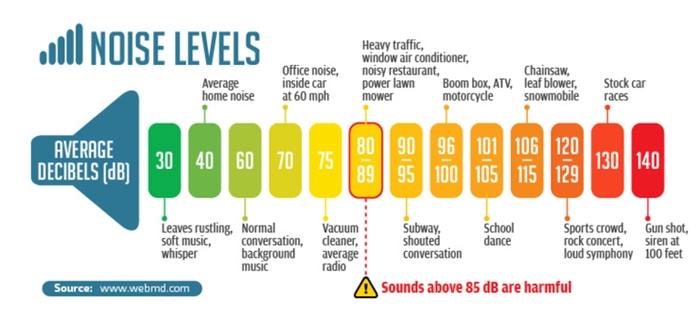
One of the biggest risks when it comes to being a session musician, is the damage that can be done to your ears over the years when playing. Many musicians suffer from Tinnitus, which is a constant ringing or buzzing in the ear that isn’t caused by an outside source. Any noise that is over 85dB must result in you wearing ear protection. When the session musician is playing the drums, they should be wearing ear protection as it is a very loud noise. If it is your job, you are going to be constantly exposed to this level of noise so you need to be careful. According to a source I found, if you listen to loud music for just 20 minutes, you need 1 whole hour of silence to let your ears relax and fix themselves instead of carrying on and just damaging them more. This is why you need ear protection as a session player, as your ears won’t be as exposed due to playing everyday. Here is a graph of how what sort of noises can affect you on the decibel chart:
Another risk of being a session musician is the equipment. Drums are difficult to move about, let alone fix and also replace. If you are needed in a recording studio but are asked to bring your own kit because they don’t supply one, you need to be really careful when moving and lifting the heavy parts of the kit. The bass drum can be hard to move around so make sure you always have help if you are unsure when carrying it as you don’t want to risk dropping it and then damaging/breaking it. Also, carrying heavy equipment over the years can cause strain to parts of your body, and it’ll most likely be your back or spine when moving about drum kits. To prevent this, you should only carry parts of the kit that you are able to handle and don’t cause to much strain to your body, if you need help then ask for it as it’s best to have assistance when moving stuff then risking damage to your body and your health. If you injure yourself, it could potentially put you of a job for a long time, if not your whole career.
Music Teacher:
There are a lot more risks in teaching when it comes to carrying it out in a school, but I will be looking at private tutoring.
One of the main risks is the equipment usage. The equipment needs to be safe fore the student to use (they’re most likely young) and you need to make sure they cannot injure themselves on it. Placing the drums in a reasonably easy position for the students to use so they aren’t reaching drums from afar, therefore causing themselves to pull a muscle or strain a part of their body. The drums need to be stable and carefully placed to prevent parts falling or hurting the student. Basically, you just need to be considerate of the fact the child is a lot younger then you and can easily be harmed. You will need to make sure they’re comfortable when playing so you don’t cause them any injury.
Another risk is for the teacher themselves and also the student. Ear protection is vital, but especially for the much younger students as a damaged ear is not what you want to give a student. Playing the drums involves your ears being really exposed to loud noises. Complete drumkits can reach a level of 90-130dB when being played. This obviously depends on how hard you’re hitting the kit and how much you are playing. For example, a rock piece would be on the higher end of that decibel chart as rock is very loud and there are usually a lot of crash cymbals involved and a wide range of frequencies can be heard. But if you were to play a jazz song, it is usually a lot calmer because a ride cymbal is used and the bass drums are quiet. When the teacher is teaching the students grades, they will cover many different genres so a wide range of noise level will happen throughout the tutoring, making it important that the student and teacher wear ear protection. Whether that is ear plugs, or noise cancellation headphones. It is vital that there is some form of protection.
 Fran Adams Drums